NEW
✨ Health insurance, now in PayFit - learn more
LATEST
💷 All the rates & thresholds you need to know for 25/26...right here
WEBINAR
✨ The Payroll Journey: Start, Scale & Succeed Globally - learn more
✨ Health insurance, now in PayFit - learn more
💷 All the rates & thresholds you need to know for 25/26...right here
✨ The Payroll Journey: Start, Scale & Succeed Globally - learn more


Employers National Insurance is a tax businesses pay on employee wages above a certain threshold, which is separate from the deductions made from the employee’s own salary.
Employers National Insurance (Secondary Class 1 NICs) is a financial contribution UK employers pay to the tax authority for eligible staff.
Unlike Primary contributions deducted from employees’ wages, this cost is borne entirely by your business, and will not affect the employee’s net pay.
These funds support the UK’s state welfare system, including the State Pension, unemployment benefits, and maternity allowance.
For growing companies, an accurate calculation of Employers National Insurance is vital for budgeting and cash flow management. Indeed, failing to calculate this correctly can lead to unexpected expenses and potential penalties from HMRC.
As an employer, you will generally pay a set percentage Employers National Insurance rate on all employee wages falling above a Secondary Threshold. The rate and threshold are either frozen or updated at the beginning of each new tax year in April. Eligible businesses can reduce their National Insurance liability by claiming the Employment Allowance.
The main rate for Employers Class 1 National Insurance has risen to 15% for the 2025/26 tax year. This increase from the previous 13.8% rate significantly impacts payroll budgets.
For the 2026/27 tax year (starting 6 April 2026), the Employer Class 1 National Insurance rate remains at 15%. This continuity provides stability for payroll budgeting, though the cumulative impact of the rate increase from 13.8% to 15% in 2025 continues to affect annual employment costs significantly.
The rate applies to all earnings above the Secondary Threshold for most standard, or Category A, employees, with other thresholds applying for other categories of workers.
The Secondary Threshold is now reduced to £5,000 annually (approx. £96 per week). This reduction means you start paying National Insurance Contributions (NICs) on a larger portion of earnings. However, the Upper Secondary Threshold for under-21s and other categories of workers remains aligned with the Upper Earnings Limit, to help keep costs contained for these categories.
| Category | 2024/25 | 2025/26 | 2026/27 |
|---|---|---|---|
| Employer NI rate | 13.8% | 15% | 15% |
| Secondary Threshold - annual | £9,100 | £5,000 | £5,000 |
| Secondary Threshold - weekly | £175 | £96 | £96 |
| Upper Secondary Threshold - annual | £50,270 | £50,270 | £50,270 |
| Employment Allowance | £5,000 | £10,500 | £10,500 |
The table below illustrates the cost impact for a typical employee earning £30,000 per annum.
| Calculation step | 2024/25 (previous) | 2025/26 (still applicable for 2026/27) |
|---|---|---|
| Gross salary | £30,000 | £30,000 |
| Threshold | £9,100 | £5,000 |
| Liable earnings | £20,900 | £25,000 |
| Rate | 13.8% | 15% |
| Annual Employer NIC | £2,884 | £3,750 |
In this scenario, the employer pays an additional £866 per annum. This increase represents a direct cost that can affect your gross profits if not managed effectively, highlighting why precise NIC tracking and planning is vital.
Impact for 2026/27:
The rates and thresholds for 2026/27 remain identical to 2025/26, meaning the annual Employer NIC for an employee earning £30,000 remains £3,750. However, employers should note:
The Lower Earnings Limit (LEL) increases to £6,708 (£559/month) from April 2026
The Employment Allowance of £10,500 continues to provide significant relief for eligible businesses.
UK statutory employment rights guide
Most UK employers must pay Class 1 NICs for any employee earning above the Secondary Threshold. This includes full-time and part-time staff on your payroll. Exceptions apply for businesses claiming the Employment Allowance with a total NI liability of less than £10,500, or those employing eligible zero-rate staff with an annual salary up to £50,270.
You generally pay 0% on earnings up to the Upper Secondary Threshold (£50,270 per year) for employees under 21, apprentices under 25, veterans in their first year of civil employment, and employees working in Freeports or Investment Zones.
This relief is designed to encourage youth hiring, help veterans return to civilian work, and incentivise government designated special trade zones. Good payroll software will apply the correct category letter (M, H, V, etc.) to trigger the claiming of this relief automatically.
The National Insurance calculation for directors is based on an annual earnings period, rather than a weekly one. NICs are thus calculated on cumulative earnings over the tax year, ensuring accurate contributions regardless of irregular pay patterns or dividends.
The Employment Allowance allows eligible businesses to significantly reduce their annual National Insurance liability.
This Employment Allowance scheme offers a deduction of up to £10,500 per business per tax year. Crucially, the previous eligibility rule preventing businesses with over £100k liability from claiming has been removed, opening the relief up to more growing businesses.
You can claim this deduction by submitting an Employer Payment Summary (EPS) to HMRC through your payroll software. You can do this before the tax year starts, or at any stage during it. Check your eligibility early to maximise cash flow benefits.
Employers must also pay National Insurance on taxable expenses and perks, or benefits in kind (BiK), such as company cars or private medical insurance.
Class 1A NICs apply to most taxable benefits in kind at a 15% rate for the 2025/26 tax year. These costs must be factored into your total workforce expenditure.
Unlike monthly Class 1 contributions, these are typically calculated annually and reported via P11D forms.
The government is phasing out the use of P11D forms, and from April 2027 all benefits in kind will need to be payrolled monthly, in line with the Making Tax Digital (MTD) programme. Modern software for SMEs will be essential for businesses handling this shift to automated monthly calculations.
Calculations should be automated through your HR and payroll process to ensure accuracy against the relevant thresholds.
Whenever you pay employees, you report NICs with a Full Payment Submission (FPS) using the Real Time Information (RTI) system. You then make a monthly payment to the Revenue, covering deducted employee tax and NI, plus your employer contributions.
Missing the payment deadline, generally the 22nd of the month, or 19th if posting a cheque, will likely lead to interest charges and penalties, and disrupt your compliance record.
Using reliable tools helps check compliance automatically, ensuring you remit exactly what you owe, promptly.

The 15% rate was introduced at the start of the 2025/26 tax year (6 April 2025) and remains at 15% for the 2026/27 tax year starting 6 April 2026. This rate stability allows for more predictable payroll budgeting, though employers should remain alert to any government announcements regarding future tax years.
Most businesses can claim it, but there are exceptions. You cannot claim if you are a public body, or if your business has only one employee who is also a director earning above the threshold. Additionally, whilst domestic staff (like nannies) are usually excluded, you can claim if they provide care or support for you or a family member. Under off-payroll working rules, service companies are also restricted regarding IR35 ‘deemed payments’, though they may still claim for other genuinely employed staff.
You generally do not pay Class 1 NICs on the first £30,000 of redundancy pay. However, standard items like Payment in Lieu of Notice (PILON) and holiday pay are treated as normal earnings and are fully liable. Any redundancy amount over £30,000 is subject to Employer Class 1A NICs.
If you underpay or overpay, you can usually correct this in your next FPS submission. However, persistent errors can trigger HMRC investigations. Using reliable HR and payroll software helps ensure payroll compliance and records that are fully tracked and traceable.
While the 15% rate is set for 2025/26, further regulatory updates are expected regarding the mandating of payrolling benefits in April 2027. Keeping an eye on government announcements is essential for long-term planning. Good payroll software will automatically apply updates as they come into effect.

Essential guide for UK employers on the Lower Earnings Limit (LEL), covering new rates, National Insurance changes & the removal of LEL for SSP eligibility.

National Insurance varies based on a number of different factors. Learn about different UK National Insurance classes, from class 1 NIC to 4, here.

Learn how to submit a Full Payment Submission (FPS) to HMRC in 2026, including deadlines, payroll data requirements, RTI rules, and how to avoid penalties.

Learn how directors’ National Insurance works in the UK in 2026, including rates, thresholds, calculation methods, and key differences from employees.

Learn what an employer reference number (ERN) is in the UK, what it looks like, where to find it, and when you need one for payroll and PAYE admin.

Understand the difference between cumulative & non-cumulative tax codes. Ensure your UK payroll is accurate & HMRC compliant for 2026 & 2026/27.
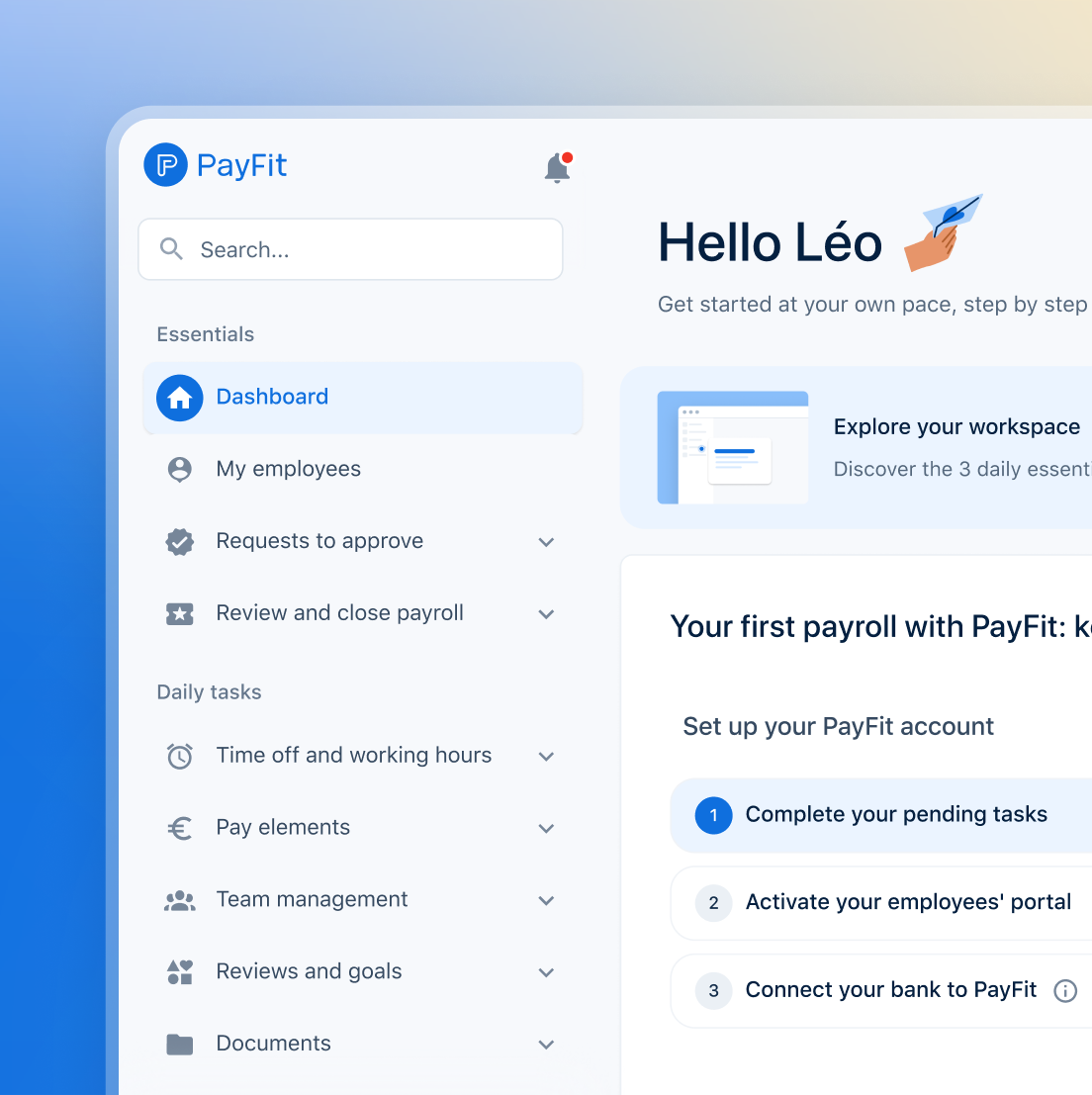
See what's new in PayFit
New features to save you time and give you back control. Watch now to see what's possible