NEW
✨ Health insurance, now in PayFit - learn more
LATEST
💷 All the rates & thresholds you need to know for 25/26...right here
WEBINAR
✨ The Payroll Journey: Start, Scale & Succeed Globally - learn more
✨ Health insurance, now in PayFit - learn more
💷 All the rates & thresholds you need to know for 25/26...right here
✨ The Payroll Journey: Start, Scale & Succeed Globally - learn more


Finding the best payroll software for growing UK businesses requires balancing advanced automation, ease of use and the ability to guarantee compliance and efficiency.
Selecting just the right platform involves evaluating your specific business needs regarding compliance, scalability, and technical integration capabilities.
Automated payroll software drastically reduces the risk of human error by handling complex deductions, statutory and occupational parental pay, payrolled benefits, pro-rations for starters and leavers and multiple pensions schemes in real time.
Manual data entry is often the primary cause of mistakes in pay and timesheet processing, which can lead to dissatisfied employees and potential fines.
By using a solution that automatically updates with the latest regulations and reforms, finance teams can ensure that every tax code change or student loan repayment threshold is applied correctly without any need for manual intervention.
This level of currency and precision is why automation is a non-negotiable feature for modern businesses managing a growing workforce in today’s ever-changing world.
Cloud technology allows authorised users to access sensitive payroll data securely from any location, which is vital for the modern, flexible workplace.
Unlike traditional desktop tools that require local installations and manual backups, a cloud-based platform stores information on secure, remote servers with enterprise-grade encryption.
This ensures that business leaders can manage their payroll processes efficiently, whether they are in the office or working remotely. Furthermore, cloud providers typically offer robust disaster recovery protocols that small local servers simply cannot match.
HMRC compliance relies on software that supports Real Time Information (RTI) submissions and automatic updates to statutory rates.
The best UK payroll software will handle the submission of Full Payment Submissions (FPS) and Employer Payment Summaries (EPS) directly to HMRC on your behalf.
Additionally, it should manage automatic enrolment for workplace pension schemes, ensuring that every eligible employee is assessed and enrolled correctly.
Keeping up with the Employment Rights Act and other evolving regulations is effortless when your provider offers legislative updates regularly pushed to the platform.
Payroll software guide
The UK market offers a diverse range of payroll solutions, ranging from traditional desktop applications to integrated cloud platforms.
Cloud-native platforms generally offer greater flexibility and speed compared topreviously mostly desktop-based systems like BrightPay, or other similar tools.
While legacy software has served the market well for years, it often struggles to provide the real-time collaboration and access that growing companies need.
In contrast, modern solutions are designed to be intuitive and collaborative, allowing finance teams to run payroll in just a few steps, while maintaining high accuracy. These platforms often include an extremely handy ‘undo payroll’ feature, allowing you to correct mistakes on the fly before the final pay run, representing a significant step forward from rigid legacy processes.
Payroll and SaaS integration allows data to flow seamlessly between your payroll, HR, and accounting systems, eliminating the need for burdensome duplicate data entry.
For example, connecting your payroll software with accounting tools like Xero or NetSuite ensures that journals are reconciled automatically after every pay run.
Similarly, integrating with HR platforms, such as HiBob, allows for the automatic synchronisation of new starter details, leave, and timesheets.
This comprehensive ecosystem of tools helps businesses manage their entire employee lifecycle much more efficiently.
An Employer of Record (EOR), such as Deel, operates differently from standard payroll software. While a payroll solution helps you manage payments for employees your business legally employs directly, an EOR acts as the legal employer for tax purposes.
This is particularly useful for companies looking to hire talent abroad without setting up a legal entity in that country, as the EOR handles local compliance.
However, for a purely UK-based workforce, an EOR needs a much greater financial effort (usually in the region of £300–£700 per employee) than using a dedicated payroll platform to manage your PAYE and compliance obligations internally.
| Solution type | Best for | Key strengths | Considerations |
|---|---|---|---|
| Automated cloud (e.g. PayFit) | Growing SMEs & mid-market | Automation, Customer Success support, ease of use, integration | Limited for companies with over 300 employees |
| Desktop / hybrid (migrating) (e.g. BrightPay) | Micro-businesses & payroll bureaus | Low cost, familiar interface | Requires manual backups, less collaborative |
| Accounting add-on (e.g. Xero) | Small businesses | Simple, keeps data in one place | Limited features for complex HR needs |
| Enterprise legacy (e.g. Sage) | Large corporations | Robust, widely used by accountants | Can be complex and expensive to scale |
| Global enterprise (e.g. ADP) | Multinational corporates | Global reach, extensive reporting | Implementation can be lengthy and costly |
| Global HR & EOR (e.g. Deel) | Distributed & remote teams | Streamlined global hiring, contractor payments | Higher per-employee cost for EOR services |
Ready to simplify payroll as you grow?
PayFit scales with UK businesses from 0 to 300 employees, connects you with expert UK-based support when you need it, and unifies payroll, HR, leave and expenses in one place, so your systems grow with you, not against you.

The cost of payroll software varies significantly depending on the level of service, automation, and features provided.
Most modern providers operate on a subscription model based on the number of employees, which allows costs to scale predictably as your business grows.
This ‘per employee per month’ structuring means, in theory, that you only pay for what you need, making it an attractive option for a growing business.
However, it is important to check if features like P11D submissions, advanced reporting, and personalised expert support are included in the base price, or charged as extras. Transparent pricing models help finance leaders budget effectively for the year ahead without the fear of hidden costs.
Traditional outsourcing often incurs hidden costs through additional charges for corrections, reports, or adding new employees mid-month. While the initial quote might seem competitive, the lack of control and the fees for ad-hoc changes can make it expensive in the long run.
Modern platforms like PayFit eliminate this uncertainty with transparent monthly subscriptions and no hidden costs for standard processing. This approach not only saves you money, but also saves time by resolving queries instantly, without you having to wait for a response from a third-party bureau.
The payroll landscape is moving towards greater employee autonomy and tighter integration with legislative changes affecting the UK workforce.
The Employment Rights Act 2025 introduced significant changes, due to be implemented in 2026 and 2027, which will require software to be more agile in handling day-one rights and flexible working requests.
As Statutory Sick Pay (SSP) and other benefits schemes evolve, payroll software must adapt its calculations and deductions immediately in order to guarantee compliance.
Therefore, platforms that offer automated legislative updates will help businesses navigate these changes without administrative headaches. Staying ahead of these legal shifts is crucial for maintaining a compliant and fair workplace.
Employee self-service portals are becoming a standard expectation for staff who want instant access to all their financial data, payslips, and documents.
Such portals allow employees to view their payslips, download P60s, and request leave directly from any device, including their mobile phones.
This empowers staff and significantly reduces the volume of administrative queries directed at HR teams.
Furthermore, modern portals often include features for managing expenses and benefits, creating a unified experience for the entire workforce.

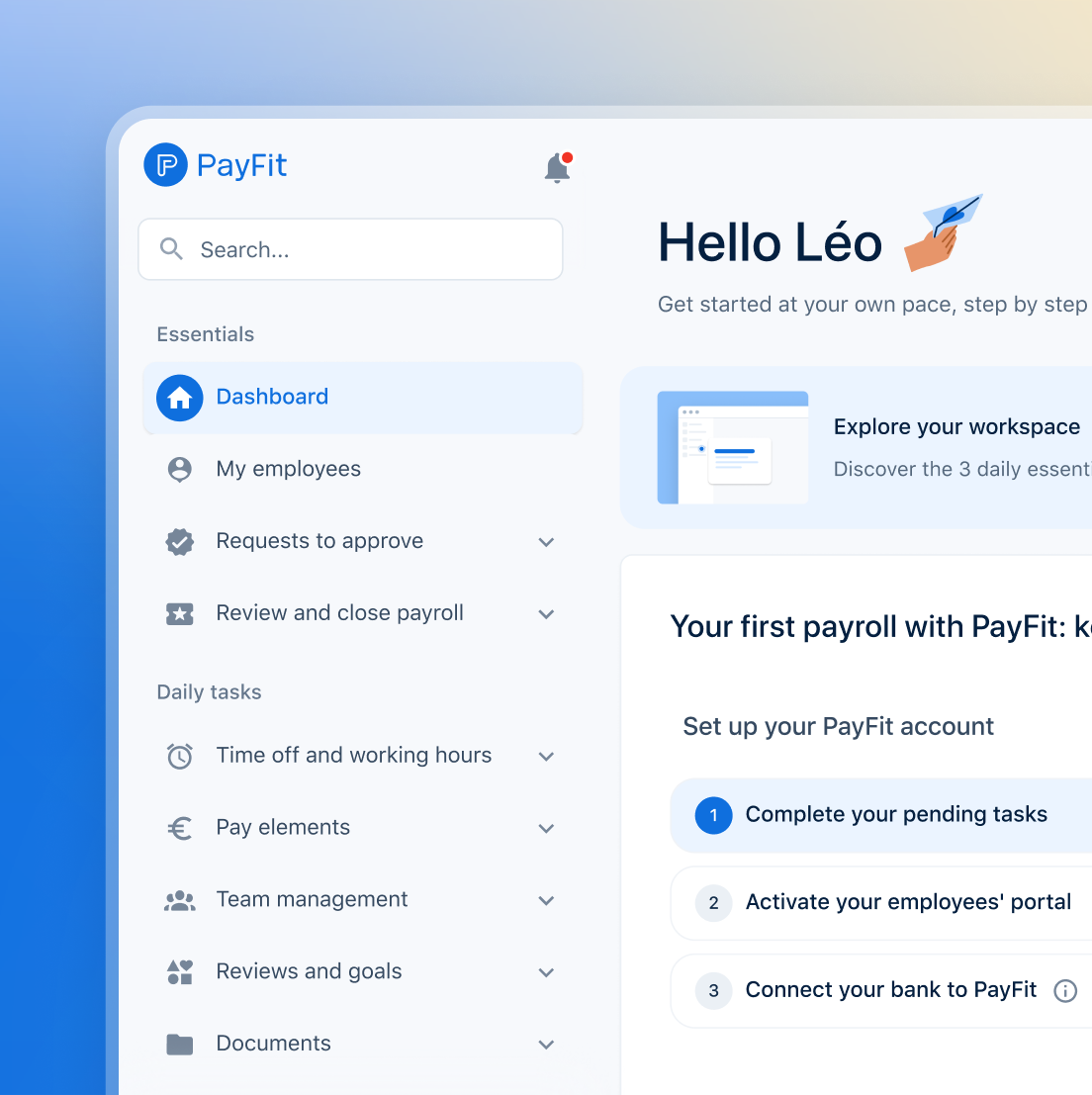
The most user-friendly solutions tend to be those designed with a ‘cloud-native’ approach, prioritising intuitive interfaces and simple, accessible workflows. PayFit is often cited for its ease of use, allowing users to manage complex tasks and calculations with very little training, by guiding them step-by-step through each process.
Switching providers is now easy, thanks to digital data exports and dedicated onboarding teams. You can switch payroll providers at any time of the year, not just at the start of the tax year, provided you have the right support to migrate your data and ensure your needs are met.
Yes, the best UK payroll software handles the entire assessment and enrolment process automatically. You can manage workplace pensions seamlessly, ensuring all eligible staff are enrolled and pension contributions are calculated correctly alongside PAYE and other deductions.
Integration is a key feature of modern platforms, allowing you to connect with various HR, accounting and time-tracking systems. PayFit integrates with leading HR software to sync employee data and timesheets, helping to eliminate manual double-entry tasks.
Many of the best payroll software solutions are cloud platforms specifically designed to help small businesses scale. They offer all the necessary tools to automate compliance and processing, without the complexity of enterprise systems, often integrating directly with accounting software like Xero to keep everything altogether in one place.
Quality support is essential, and many premium solutions include access to highly experienced payroll experts. Pricing plans should be transparent about the level of support included, ensuring you have just the right help whenever you need it in order to manage your payroll effectively.

Cloud-based payroll software helps UK businesses improve accuracy, reduce errors and maintain HMRC compliance by centralising payroll data and calculations.

Learn how to run payroll in the UK from how to register for PAYE, calculate tax and NI, send RTI submissions on time, to avoiding HMRC penalties.

We cover the principles of UK payroll accounting, as well as National Insurance rates, 2026/27 tax year compliance & how to streamline your financial reporting.

Essential guide for UK managers on payroll in human resource management, covering National Insurance changes, 2026 regulations, and compliance.

Understand exactly what is net pay, how to calculate it, and the latest UK tax and National Insurance changes for affecting your payroll.

Learn how to calculate monthly payroll for your UK business. This guide covers gross pay, tax deductions, 2025/2026 rates, and future legislative changes.
See what's new in PayFit
New features to save you time and give you back control. Watch now to see what's possible