NEW
✨ Health insurance, now in PayFit - learn more
LATEST
💷 All the rates & thresholds you need to know for 25/26...right here
WEBINAR
✨ The Payroll Journey: Start, Scale & Succeed Globally - learn more
✨ Health insurance, now in PayFit - learn more
💷 All the rates & thresholds you need to know for 25/26...right here
✨ The Payroll Journey: Start, Scale & Succeed Globally - learn more

Zero-hours contracts have become a common feature of the modern workplace. They’re often used in sectors where staffing needs can change frequently, such as hospitality, events, delivery services, retail, and warehouse work. These agreements allow employers to offer work when it is available, without guaranteeing a set number of hours, making them a flexible option for businesses with fluctuating demand.
Below, we will take a closer look at the key things employers need to know about zero-hours contracts. We’ll examine what the law says, the rights workers have, what benefits may apply, and when these contracts may or may not be appropriate for your workforce.
A zero-hours contract (sometimes written as a 0-hour contract) is a type of work agreement where an employer is not required to guarantee a specific number of working hours. Instead, work is offered when it’s available, and the worker can usually choose whether to accept the shifts offered or not.
In simple terms, a 0-hour contract job refers to a flexible arrangement where employees are paid only for the hours they work, rather than receiving fixed weekly hours. No matter how many hours an individual completes, an employer must pay at least the National Minimum Wage under UK law.
There are several defining features that make zero-hours contracts different from traditional employment contracts. These include:
No guaranteed hours: Employers are not required to provide a minimum number of working hours.
Work offered when needed: Shifts are typically offered based on business demand or operational needs.
Flexible working arrangement: Both employers and workers can benefit from flexibility in scheduling.
Workers can usually decline shifts: In many cases, workers are not obligated to accept every shift offered.
Payment only for hours worked: Workers are paid only for the hours they actually work.
Legal rights still apply: Workers on zero-hours contracts are still entitled to rights such as the National Minimum Wage and paid holiday.
Common in certain sectors: Typical zero-hours contract examples include work done in industries such as hospitality, retail, delivery services, and warehouse work.
A zero-hours contract outlines the terms of a flexible working arrangement where no minimum number of working hours is guaranteed. The contract typically explains how shifts are offered, how pay is calculated, and the rights and responsibilities of both the employer and the worker. It may also include details such as pay rates, notice periods for shifts, and workplace policies that apply to the role.
The UK is going through a period of significant reform when it comes to zero-hours contract rules and obligations. While these contracts are not being banned, upcoming changes aim to improve predictability and ensure security for workers. This means employers may need to adjust how they use zero-hours or low-hours arrangements in the coming years. The following measures won’t be introduced until 2027, and many of the details will be subject to consultation in 2026. These rules will apply to those employed on agency zero-hours contracts as well.
However, here are some of the provisions of the Employment Rights Act 2025 (The Act) you may need to consider:
Businesses that use zero-hours contracts may be required to offer a guaranteed number of hours to employees who work a consistent pattern of hours on a regular basis. This may involve reviewing the hours worked by individuals on zero-hours or low-hours contracts over a reference period, most likely 12 weeks. Employers will need to offer contracts reflecting those regular hours and repeat this review periodically unless the worker has been offered a contract with sufficient guaranteed hours. Employees will have the option to accept or decline the offer, but employers will still have to make it if the criteria is met. As a result, this change may lead to more predictable hours.
In some cases, employers may be able to offer fixed-term contracts with guaranteed hours for a defined period instead of employing someone on a zero-hours contract. Once the contract ends, the employer may be able to offer a new fixed-term contract with fewer guaranteed hours. However, this approach will only be acceptable where it is considered reasonable and justified by genuine business needs, such as seasonal demand or temporary projects.
The reforms are also expected to introduce additional protections for workers on flexible contracts. These may include:
Fair notice of shifts, giving workers more time to prepare for work.
Compensation for shifts cancelled at short notice.
Greater transparency around working time regulations and expectations.
Some of the most crucial zero-hours contract rights employees should have under UK employment law include:
National Minimum Wage: Workers must be paid at least the National Minimum Wage for every hour they work.
Paid annual leave: It’s crucial to learn how to manage holiday pay, typically calculated as a proportion of employees’ total hours.
Rest breaks and working time regulations: Workers are entitled to rest breaks and limits on working hours.
Freedom to work for other employers: Exclusivity clauses that prevent zero-hours workers from working elsewhere are not allowed in the UK.
Statutory sick pay (if eligible): Workers may qualify for Statutory Sick Pay if they meet the required earnings threshold.
Protection from unfair treatment: Workers cannot be treated unfairly for asserting their legal rights.
| Right | Applies to zero-hours workers? | Notes |
|---|---|---|
| National Minimum Wage | Yes | Must be paid for all hours worked |
| Paid Holiday | Yes | Accrued based on hours worked |
| Statutory Sick Pay | Sometimes | Depends on earnings threshold |
| Pension auto-enrolment | Sometimes | If eligible based on earnings |
| Protection from exclusivity clauses | Yes | Workers can work for other employers |
Workers on zero-hours contracts have the right to raise concerns if they believe their legal rights are not being respected. This could include issues such as being paid below the National Minimum Wage, not receiving the correct holiday pay, or unfair treatment in the workplace. Employers should ensure clear communication channels are in place so workers feel comfortable raising concerns and seeking clarification about their rights.
The rights a person has on a zero-hours contract can depend on whether they are legally classified as a worker or an employee. While both are entitled to key protections such as the National Minimum Wage and paid holiday, employees may also qualify for additional rights, including redundancy pay and protection against unfair dismissal after a qualifying period. Understanding this distinction can help employers ensure they are meeting their legal obligations.
2026 payroll checklist
When looking to draft a zero-hour contract, keep in mind that workers may be entitled to Statutory Sick Pay (SSP), but eligibility depends on whether they meet certain conditions. In the UK, workers must earn at least the Lower Earnings Limit (set by the government each tax year) to qualify for Statutory Sick Pay. Because hours on a zero-hours contract can vary, some workers may not meet this earnings threshold during certain periods.
To qualify for SSP, workers must typically:
Be classed as a worker or employee.
Be ill for at least four consecutive days (including non-working days).
Earn at least the minimum weekly earnings threshold required for SSP.
Employers are responsible for paying Statutory Sick Pay when workers meet the eligibility requirements set out by the government. However, if a worker does not meet the earnings threshold or has not been scheduled to work during their illness, they may not qualify for SSP. Employers should ensure that sick pay policies are clearly communicated, particularly where working hours vary from week to week.
Employers may consider using zero-hours contracts in situations such as:
Seasonal demand: Businesses that experience busy periods at certain times of the year, such as holidays or peak shopping seasons.
Fluctuating workloads: Industries where demand changes week to week, including hospitality, retail, and leisure.
Event-based work: Temporary staffing needs for events, conferences, or large projects.
Shift-based industries: Sectors such as delivery driving, care services, and warehouse operations, where shifts may vary depending on operational requirements.
Covering staff absences: Zero-hours workers can help fill gaps when permanent employees are on leave or unavailable.
However, employers should avoid relying on zero-hours employment contracts when workers are consistently working regular hours. In these cases, offering a contract with guaranteed hours may provide greater stability for workers and reduce potential compliance risks as employment laws evolve. Using zero-hours contracts responsibly can help businesses maintain flexibility while ensuring workers are treated fairly and transparently.
Before introducing zero-hours contracts, employers should consider whether the role genuinely requires flexible hours. These arrangements are most suitable when workloads vary, and it is not possible to guarantee consistent shifts. Employers should also think about how shifts will be communicated, how worker availability will be managed, and whether alternative contract types may be more appropriate for roles with regular hours.
Some best practices employers should consider include:
Provide clear written terms: Ensure workers understand the nature of the contract, including how shifts are offered and how pay is calculated.
Communicate schedules early: Giving workers as much notice as possible helps them plan their time and improves working relationships.
Avoid over-reliance on zero-hours contracts: If a worker regularly works consistent hours, it may be more appropriate to offer a contract with guaranteed hours.
Be transparent about expectations: Clearly explain how often work may be available and whether workers are expected to accept shifts.
Treat workers fairly and consistently: Ensure zero-hours workers are treated with the same respect and fairness as other members of staff.
Use cloud-based payroll software to manage flexible workers: Payroll software can help employers track variable hours, calculate pay accurately, and reduce the administrative load associated with managing zero-hours contracts and casual workers.
Provide useful guidance to employees, including information on reviewing, changing or terminating zero-hours contracts.
Stay up to date with employment law: With changes to legislation expected in the coming years, employers should review their use of zero-hours contracts regularly.
Employers should avoid relying on zero-hours contracts for roles where workers regularly work consistent hours. Doing so can create compliance risks and may lead to worker dissatisfaction if expectations are unclear. It is also important to avoid poor communication around shift scheduling or pay calculations, as this can lead to confusion and potential disputes.
If problems arise with a zero-hours contract arrangement, employers should review working patterns and contract terms to ensure they remain appropriate. This may involve clarifying expectations, updating contract terms, or considering whether a different contract may be more appropriate.
Zero-hours contracts can provide valuable flexibility for businesses managing fluctuating workloads, but they must be used carefully and in line with UK employment law. Employers should ensure workers understand their rights, stay informed about upcoming legal changes, and review working patterns regularly to ensure contracts remain appropriate.
With the right tools in place, employers can manage zero-hours contracts more efficiently while maintaining transparency and compliance. Payroll software can help businesses streamline payroll, manage employee data, and stay aligned with evolving employment legislation.

2026 payroll checklist
Zero-hours contracts do not usually have a fixed end date, but they also do not guarantee ongoing work. Employment may continue as long as both the employer and worker agree to the arrangement and work is offered.
If a worker consistently works regular hours over time, employers may choose to offer a contract with guaranteed hours. Upcoming employment law reforms are also expected to require employers to offer guaranteed hours where workers regularly work predictable patterns.
Yes. In the UK, exclusivity clauses that prevent workers on zero-hours contracts from working for other employers are not allowed. This means workers can accept work from multiple employers if they choose to do so.
In many cases, workers on zero-hours contracts can refuse shifts offered by their employer. These contracts are designed to provide flexibility for both sides, meaning workers are usually not required to accept every shift. However, expectations around availability may still be outlined in the contract.
No. Zero-hours contracts are not being banned under the 2025 Employment Rights Act. However, new regulations will require employers to review working patterns and offer more predictable hours where appropriate.

Learn what the Carer’s Leave Act means in 2026: carers’ rights, how leave works, notice rules, postponement, and policy steps for employers.

Is paternity leave 14 working days in the UK in 2026? Learn how long paternity leave lasts, who is eligible, how pay works and what notice is required.

Learn what Labour’s 4-day week plans mean in 2026, plus your options now: flexible working, compressed hours, contracts, and HR actions.

What is the Alabaster ruling? Learn how pay rises during maternity leave affect Statutory Maternity Pay (SMP) and how to calculate arrears correctly.

A guide for employers on the Neonatal Care Act, in force since April 2025. Learn about leave entitlement, pay eligibility, notice periods & the two-tier system.

A new flexible working law came into effect in 2024. Employees have more say over how & when they work. Understand what it means for you as an employer.
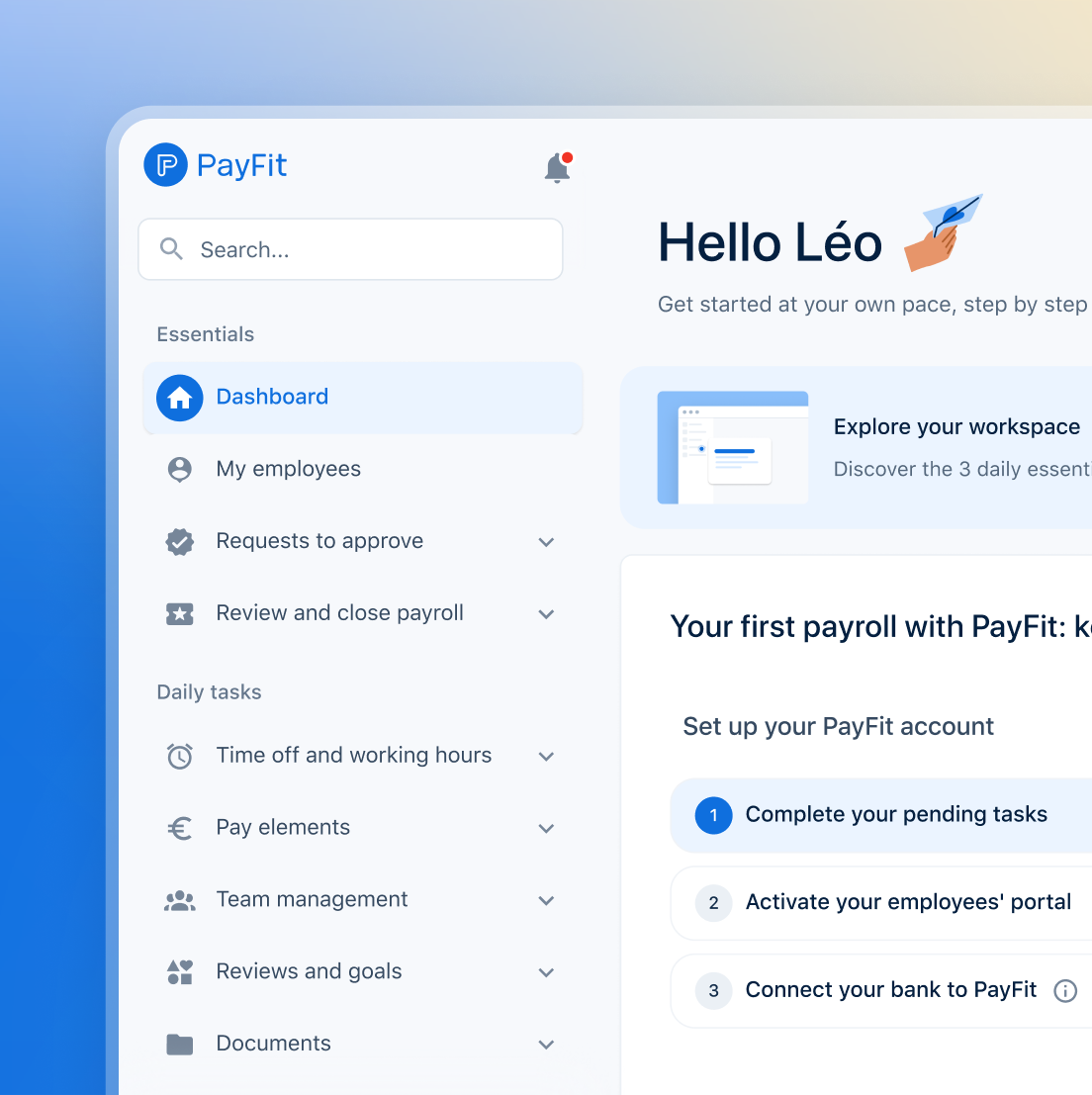
See what's new in PayFit
New features to save you time and give you back control. Watch now to see what's possible