NEW
✨ Health insurance, now in PayFit - learn more
LATEST
💷 All the rates & thresholds you need to know for 25/26...right here
WEBINAR
✨ The Payroll Journey: Start, Scale & Succeed Globally - learn more
✨ Health insurance, now in PayFit - learn more
💷 All the rates & thresholds you need to know for 25/26...right here
✨ The Payroll Journey: Start, Scale & Succeed Globally - learn more
Get new hires up to speed fast
Set clear goals and expectations
Build happy, successful teams
Streamline your onboarding process
Ensure compliance and avoid costly mistakes
A strong start is vital in welcoming a new employee to your team. A well-structured onboarding process can transform a nervous new hire into a confident, productive and engaged team member.
For growing businesses in the UK, where every new employee’s contribution is critical, a streamlined, effective onboarding process is a non-negotiable for success. That’s why we have created this comprehensive onboarding checklist, a free resource you can download, and designed to support you, your management and your team in mastering the art of employee onboarding.
First impressions matter. The way you welcome a new employee sets the tone for their entire journey with your company. A positive, well-organised onboarding can lead to better employee engagement, job performance, and employee retention. Conversely, a poor start can leave new hires feeling confused, isolated and disengaged, increasing the likelihood that they will leave the company within their first year.
For growing businesses, the cost of high employee turnover is substantial. Replacing an employee costs thousands in recruitment fees, lost productivity, and training for the new hire. By investing in a robust onboarding system, you can reduce employee turnover, and create a more stable and productive workforce.
Effective onboarding is also the best opportunity to immerse your new hire in your company culture. It’s a chance to share your company’s values, mission and vision, helping your new employee understand how their role and work contributes to the bigger picture. It fosters a sense of belonging and purpose, key drivers of engagement and motivation. It identifies areas for the right training and growth. And it helps the new team member hit the ground running, so they can start making a valuable contribution to your team from day one.
Onboarding checklists are more than just a list of tasks. They have to guide you step-by-step through every stage of the employee onboarding process, from the moment a candidate accepts your employment offer to the end of their probation period and beyond. Our own checklist is divided into five key stages, each with its own set of actions and responsibilities for different people in your management structure:
Pre-boarding: This stage covers everything you need to do before your new hire’s first day, from sending them their contract and a welcome package to providing access to their email and software accounts.
Day 1: This section focuses on making your new hire’s first day a success, with tasks like providing them with their P45, introducing them to the team, and sharing their schedule for the week.
Week 1: Here, you’ll find a list of actions to help your new hire settle into their role, such as re-sharing their role description, agreeing on objectives, and booking training sessions.
Months 1-3: This stage is all about embedding your new hire into your company’s structures and processes, with tasks like setting clear end-of-probation expectations and collecting regular feedback.
End of probation and beyond: The final section of the checklist provides a roadmap for your new hire’s long-term success, with tasks like gathering performance notes and confirming goals for the next few months.
By following our onboarding checklist, you can ensure you cover all the bases and provide your new hires with a consistent and positive onboarding experience
The first few days of a new job can be overwhelming. New hires are often bombarded with information, and it can be difficult for them to know where to focus their attention. Our onboarding checklist helps you to cut through the noise and provide your new hires with the information and resources they need to succeed.
The checklist includes tasks like sharing relevant documentation, such as your company handbook and product information, and providing a clear agenda for their first day and week. This can reduce anxiety and ensure that your new hire feels prepared and confident from the outset.
The checklist also emphasises the importance of setting clear goals and expectations. By agreeing on objectives for the first week and months, you support your new hire in understanding what is expected of them and how their performance will be measured. This improves focus and motivation, and ensures that your new hire is aligned with your company’s goals.
A great onboarding process isn’t just about getting your new hire up to speed on their role. It’s also an opportunity to build a strong and engaged team. Our onboarding checklist includes several tasks designed to foster a sense of belonging and teamwork vital for a positive work environment.
For example, the checklist suggests getting the team to sign a welcome card for the new hire and booking a welcome lunch with the team. These small gestures can make a huge difference, helping your new hire feel welcome and valued by their new colleagues.
The checklist also recommends assigning a buddy or mentor to your new hire. A buddy can be a great source of support for a new employee, answering their questions, showing them the ropes, and helping them navigate the unwritten rules of your company culture. This can help your new hire feel more connected to the team and more confident in their new role.
A growing business must be as efficient as possible with time and resources. Our onboarding checklist helps you streamline your onboarding process and save valuable time.
The checklist provides a clear, concise overview of all the tasks that need to be completed during the onboarding process, from pre-boarding to the end of probation. This will help you to stay organised and ensure that nothing falls through the cracks.
The checklist also assigns responsibilities for each task to different users or departments, such as HR, line management, or IT. This can help to avoid confusion and ensure that everyone knows what they are responsible for.
By using our onboarding checklist, you will create a more efficient and effective onboarding process, freeing up your time to focus on other important aspects of your business.
Onboarding a new employee involves a lot of administrative tasks, from collecting payroll documents to ensuring compliance with HMRC requirements. Our onboarding checklist can help you to stay on top of these tasks and avoid costly mistakes.
The checklist includes a section on payroll, with tasks like asking for bank and personal details and setting the new starter up as PAYE with HMRC. It also reminds you to get your new hire’s P45, or share the HMRC New Starter Checklist to ensure correct tax code application.
The checklist also provides a list of common onboarding mistakes to avoid, such as failing to engage with new hires before their first day, information overload, and ignoring the company culture. By being aware of these common pitfalls, you can take steps to avoid them, and create a more positive and effective onboarding experience for your new hires.
Our free onboarding checklist is a comprehensive resource that will help you to create a seamless and effective onboarding experience for your new hires. Here’s a summary of what’s inside:
A step-by-step guide to the employee onboarding process, from pre-boarding to the end of probation.
A detailed list of tasks for each stage of the onboarding process, with clear responsibilities assigned to HR, management, and IT.
A list of common onboarding mistakes to avoid, so you can learn from the experiences of others.
A visually appealing and easy-to-use PDF format that you can download and use again and again.

with the information and resources they need to become productive members of your team.
so new hires know what is expected of them from day one.
through a positive and welcoming onboarding experience that fosters a sense of belonging and teamwork.
with legal and employment requirements.
Our onboarding checklist is a comprehensive guide that covers every stage of the employee onboarding process, from pre-boarding to the end of probation and beyond. It includes a detailed list of tasks for each stage, with clear responsibilities assigned to HR, management, and IT. The checklist also includes a list of common onboarding mistakes to avoid.
The onboarding checklist is a downloadable PDF document that you can save and print for easy reference.The onboarding checklist is a downloadable PDF document that you can save and print for easy reference.
This checklist will help you to:
Get new hires up to speed fast.
Set clear goals and expectations.
Build happy, successful teams.
Streamline your onboarding process and save time.
Ensure compliance with legal and regulatory requirements.
A good onboarding process can have a significant impact on employee retention. By making new hires feel welcome, valued and supported from day one, you can boost their engagement and loyalty to your company. A well-structured onboarding process supports new hires in becoming productive more quickly, which can lead to greater job satisfaction and a lower likelihood of them leaving the company. For more information on this topic, read our blog post on employee retention strategies.
The onboarding process should begin as soon as a candidate accepts your job offer. The pre-boarding stage is a crucial opportunity to make a great first impression. Our onboarding checklist includes a detailed pre-boarding section, with tasks like sending a welcome package and setting up email and software accounts.
When onboarding a new employee in the UK, you will need to collect several payroll documents, including their P45 from their previous employer. If they don’t have a P45, you will need to ask them to complete a Starter Checklist (previously known as a P46). You will also need to collect their personal details, including their full name, address, date of birth, and National Insurance number, as well as their bank details for salary payments. For more information on this see our guide to payroll for small businesses.
To ensure compliance with HMRC requirements when onboarding new employees, you need to make sure you have all the correct information for payroll. This includes using the correct tax code, which you can determine from their P45 or Starter Checklist. You will also need to report their pay and deductions to HMRC on or before each payday. With a payroll software like PayFit, you can automate these tasks and ensure compliance.
Handling multiple new starters can be a challenge for a growing business. The most efficient way to handle this is to have a standardised and repeatable onboarding process. Our onboarding checklist supports you in creating this process. You can also use technology to automate some of the administrative tasks, such as sending out welcome emails and collecting payroll information. Payroll and HR software like PayFit can be a great tool for this, allowing you to manage multiple new starters from a single platform.
There are many ways to make the onboarding experience more engaging for new employees. Our onboarding checklist includes several suggestions, such as sending a welcome package, organising a team lunch, and assigning a buddy or mentor. You can also make the onboarding process more interactive by including activities like quizzes, games, and team-building exercises. It’s also important to gather feedback from your new hires to understand what they enjoyed about the onboarding process and what could be improved. Read more about this on our detailed blog post about creating an employee onboarding program.
It’s not uncommon for employee details to change after they’ve started, for example, if they move to a new house, or change their bank account. It’s important to have a clear process for updating employee information. If you use a payroll and HR software like PayFit, employees can often update their own details through a self-service portal. Otherwise, you should have a designated person in HR responsible for updating employee records. This person must make sure that any changes are updated in all relevant systems, including your payroll software, to avoid any errors
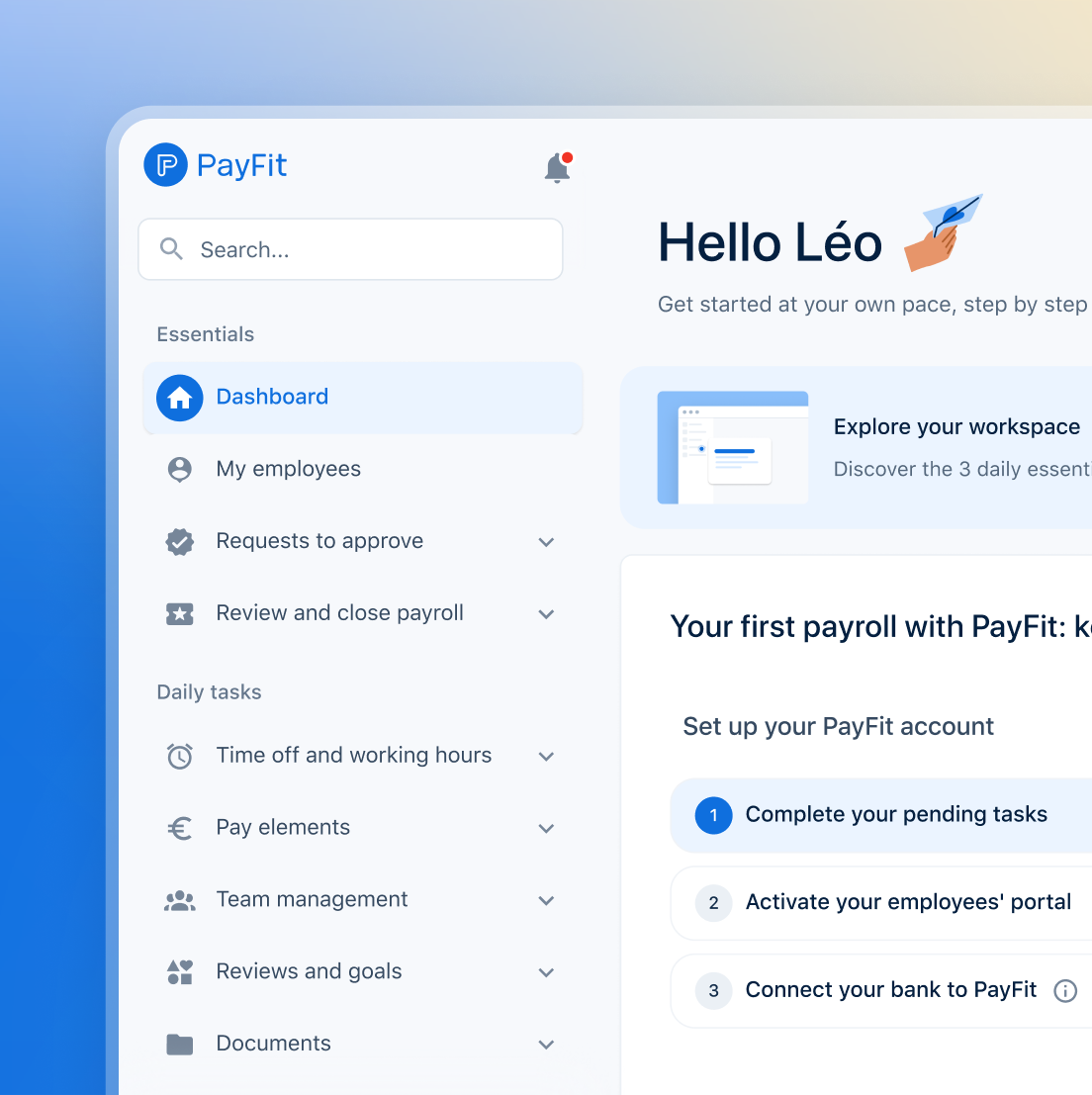
See what's new in PayFit
New features to save you time and give you back control. Watch now to see what's possible