NEW
✨ Health insurance, now in PayFit - learn more
LATEST
💷 All the rates & thresholds you need to know for 25/26...right here
WEBINAR
✨ The Payroll Journey: Start, Scale & Succeed Globally - learn more
✨ Health insurance, now in PayFit - learn more
💷 All the rates & thresholds you need to know for 25/26...right here
✨ The Payroll Journey: Start, Scale & Succeed Globally - learn more


Cloud payroll software isn’t just “payroll, but online”. In 2026, it’s increasingly how UK teams streamline payroll, reduce manual admin, and keep payment records accurate across the tax year, even as HMRC guidance and processes are updated.
Instead of relying on desktop systems with limited visibility and frequent maintenance, a cloud-based payroll solution brings pay, PAYE, deductions, and reporting into one workflow, with stronger security controls, clearer payroll audit trails, and more consistent support.
Cloud payroll software is payroll software hosted in the cloud that lets employers run payroll through a secure platform, rather than installing and maintaining software on a single device.
In practice, it supports the full payroll cycle: collecting payroll data, calculating pay and deductions, producing employee pay statements, and generating the information needed for HMRC reporting.
Most improvements come from three areas: speed, accuracy, and team visibility.
With a cloud payroll system, teams can review figures, apply changes, and approve a payroll run in one place, without waiting for local installs, manual file transfers, or one person’s machine.
This is especially useful when you’re handling month-end deadlines, ad hoc pay changes, or multiple sites.
Because cloud payroll software centralises payroll data, it reduces the chance of working from outdated records and helps avoid common payroll errors that can lead to compliance issues and employee dissatisfaction. It also makes it easier to keep employee details, tax codes, and pay changes aligned, particularly when payroll is shared across more than one person.
This improved accuracy directly supports payroll compliance, helping businesses meet HMRC requirements consistently and avoid common reporting errors that can trigger penalties.
Many solutions include an employee portal where people can view pay statements and key payroll details, which often reduces payroll queries and improves the overall employee experience.
Payroll software guide
Switching systems can feel disruptive, but careful preparation usually makes the transition quicker and cleaner.
Before choosing a provider, consider:
Integrations (accounting, expenses, HR, time tracking)
Data migration (secure transfer of employee and payroll records)
Training and onboarding so teams adopt the new process quickly
Security (role-based permissions, logs, MFA, encrypted backups)
Support model (response times, guidance during setup, ongoing help)
A good provider should clearly explain how the setup works, and what they need from you to complete the changeover safely. Following payroll best practices during migration also helps ensure a smooth transition and sets up your cloud payroll system for long-term success.
| Topic | Cloud payroll software | Desktop payroll software |
|---|---|---|
| Team workflow | Shared platform for authorised users | Often tied to one device/location |
| Updates | Typically automatic | Manual updates are common |
| Reporting | Designed for consistent outputs | Can require workarounds |
| Pay statements | Often digital by default | Usually generated locally |
| Security | Central controls + logs | Depends heavily on local setup |
| Support | Provider-led services | Often relies on internal IT |
Payroll admin piles up quickly: changes each month, new joiners, deadlines, reporting requirements, and the pressure to keep pay accurate.
A cloud-based payroll solution helps businesses simplify payroll management by bringing calculations, employee updates, pay statements, and reporting into one structured workflow, reducing manual steps and making it easier to stay compliant as rules evolve over the year.
With the right cloud payroll platform, businesses can:
Run payroll with a clearer process and fewer handovers
Calculate pay and deductions accurately, including PAYE and tax requirements
Give employees a simple way to view pay statements and key payroll information
Reduce the risk of late reporting by keeping tasks structured and visible
Benefit from guidance, support, and training as the business grows
For organisations scaling headcount or formalising payroll processes, cloud payroll software provides a more reliable operational backbone, helping teams stay organised, compliant, and audit-ready without adding administrative strain.
With centralised data and automated calculations, cloud systems also simplify payroll reconciliation, making it easier to match payroll records with bank statements and general ledgers at month-end.

Payroll Software Guide
Cloud payroll software can be used for HMRC payroll processes as long as it supports PAYE requirements and produces the right reporting outputs. The key is choosing a solution built for UK payroll compliance.
Yes, by centralising payroll data, automating repetitive steps, and reducing back-and-forth. The biggest time savings usually come from fewer manual corrections and smoother approvals.
Payroll reporting is part of the wider payroll process: it’s how employers provide payroll and payment information (including deductions) for compliance and records. Cloud payroll refers to the system used to run payroll and manage reporting in a cloud platform.
Most cloud payroll solutions include pay statements and pension handling as standard features, though the depth varies by provider. Always confirm what’s included in pricing and what’s an add-on.

Student loan payroll UK explained for 2026, including deductions and thresholds. Learn how repayments are calculated and avoid common mistakes.

Master the UK payroll year end. Our guide helps HR and finance managers handle HMRC deadlines, final submissions (FPS/EPS), and the new tax year setup.

Understand gross pay & 2026/27 rules changes with our guide for finance & HR leaders on calculating salaries, tax & contributions, & ensuring compliance.

Understand exactly what is net pay, how to calculate it, and the latest UK tax and National Insurance changes for affecting your payroll.

Learn how to calculate monthly payroll for your UK business. This guide covers gross pay, tax deductions, 2026/2027 rates, and future legislative changes.

Compare the best payroll software for UK businesses in 2026. Discover solutions to automate compliance, support growth, & manage employees effectively.
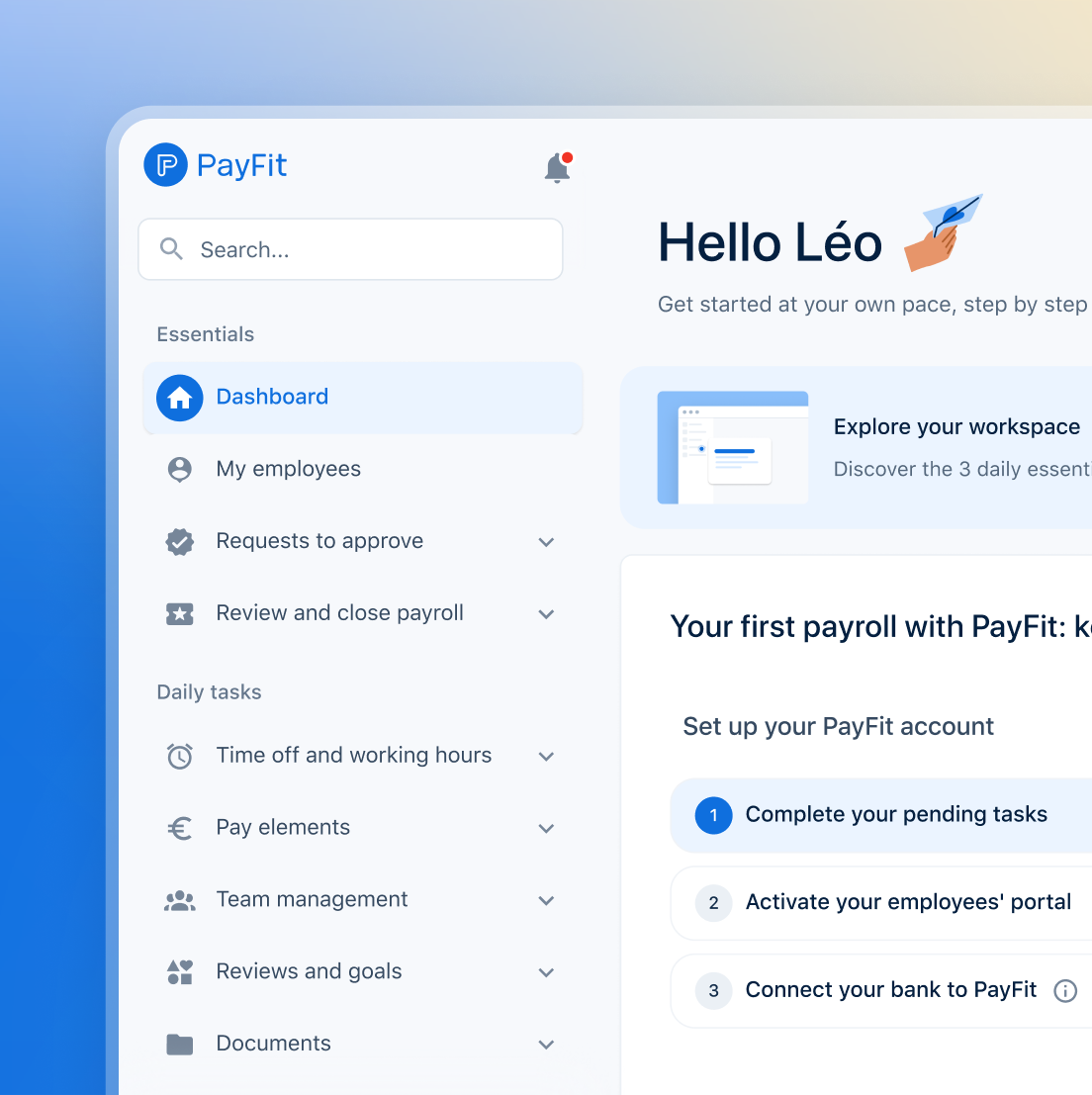
See what's new in PayFit
New features to save you time and give you back control. Watch now to see what's possible